
Restorative Slow-Cooked Beef & Winter Root Stew

Updated: Jul 10
When the cold months settle in, nothing comforts like a warm, hearty stew. This slow-cooked beef and winter root vegetable stew transforms tougher cuts of meat into tender, flavorful bites while bringing out the natural sweetness of seasonal roots. The long cooking time breaks down collagen in the beef, creating a rich, silky texture that feels like a hug in a bowl.
This recipe is perfect for anyone who wants a nourishing meal with minimal hands-on time.
Whether you use a slow cooker or a stovetop pot, the result is a satisfying dish that highlights the best of winter’s harvest.
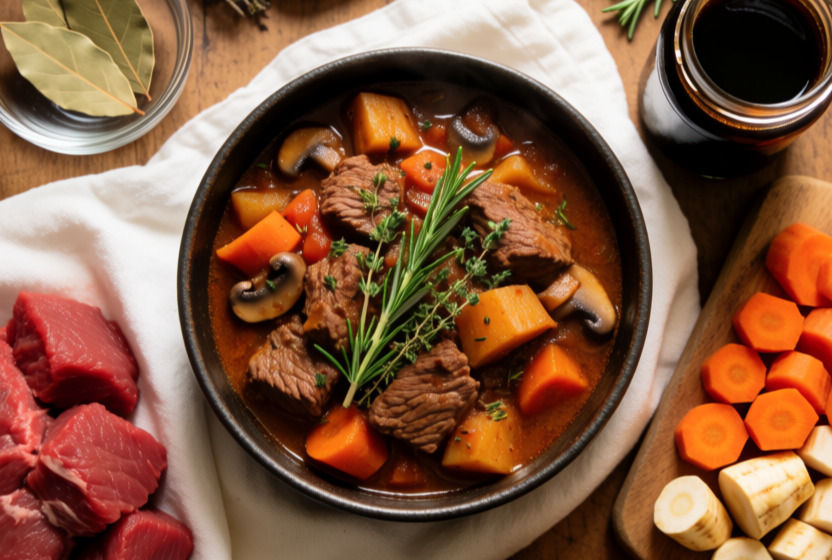
This one-pot recipe uses slow cooking to break down tougher, nutrient-dense cuts of meat, yielding a melt-in-your-mouth texture while preserving the integrity of the ingredients.
Prep time: 15 minutes | Cook time: 2 hours (or 6-8 hours in a slow cooker) | Servings: 6
Ingredients
The Base:
1 kg grass-fed beef chuck or gravy beef, cut into large cubes
1 tbsp tallow, ghee, or cold-pressed olive oil
1 large leek, well-rinsed and sliced
4 cloves garlic, crushed
2 tbsp tomato paste (from a glass jar if possible)
The Heart:
3 cups rich, high-quality beef bone broth
3 large carrots, chopped into thick rounds
2 parsnips or 1 small swede (rutabaga), peeled and cubed
1 cup button mushrooms, halved
1 tbsp coconut aminos or soy sauce
The Herbs:
2 sprigs fresh rosemary
4 sprigs fresh thyme
2 bay leaves
Sea salt and coarsely ground black pepper
Instructions
Sear the Meat: Heat the oil in a heavy-based cast-iron pot (like a Dutch oven) over medium-high heat. Season the beef generously with sea salt and pepper. Brown the meat in batches to avoid overcrowding the pan, then set the beef aside on a plate.
Sauté the Aromatics: Reduce the heat to medium. Add the sliced leek to the pot and sauté for 4-5 minutes until softened. Stir in the crushed garlic and tomato paste, cooking for another minute until caramelized and fragrant.
Deglaze and Combine: Pour in a splash of the bone broth to deglaze the pot, scraping up all the flavorful browned bits from the bottom. Return the beef (and any resting juices) to the pot.
Add Vegetables and Simmer: Add the chopped carrots, parsnips, mushrooms, soy sauce or coconut aminos, remaining bone broth, and the fresh herbs. The liquid should just about cover the ingredients.
Slow Cook: Bring the stew to a gentle simmer. Cover with a tight-fitting lid, reduce the heat to the lowest setting, and let it cook gently on the stovetop for 2 hours (or transfer to a slow cooker on 'Low' for 6-8 hours), until the beef falls apart easily with a fork.
To Serve: Discard the woody herb stems and bay leaves. Ladle into bowls and serve alongside some lightly steamed greens like broccolini or green beans.
Tips for Perfect Texture and Flavor
Don’t rush the cooking: Slow cooking breaks down tough fibers and melds flavors.
Layer flavors: Browning meat and sautéing aromatics add depth.
Use fresh herbs: Add some at the start and some near the end for brightness.
Avoid overcooking vegetables: Add delicate roots like potatoes in the last hour if cooking longer.
Skim fat: Remove excess fat from the surface for a cleaner taste.
Serving Suggestions
This stew pairs well with:
Crusty bread or buttered rolls to soak up the sauce.
A simple green salad with a tangy vinaigrette to balance richness.
Leftovers taste even better the next day as flavors continue to develop.
Nutritional Benefits of This Stew
GLP-1 & Satiety: A robust serving of high-quality animal protein sends strong satiety signals to the brain, helping to naturally regulate appetite and minimize subsequent cravings.
Tissue Recovery: The slow cooking process, combined with a rich bone broth, provides a bioavailable source of collagen and amino acids like glycine and proline, which are essential for musculoskeletal health and joint repair.
Nutrient Density: Root vegetables offer complex, slow-burning carbohydrates and prebiotic fiber, which support a healthy gut microbiome without causing rapid glucose spikes.
Using nutrient-dense cuts of beef and winter vegetables creates a meal rich in:
Protein: Supports muscle repair and energy.
Iron and zinc: Important for immune function and metabolism.
Fiber and vitamins: From root vegetables, aiding digestion and overall health.
Collagen: Slow cooking releases gelatin from connective tissue, which may support joint health.
This stew offers a balanced, wholesome meal that fuels the body during colder months.
Estimated Nutrition Per Serving
Calories: ~480 - 510 kcal
Protein: 45g
Fat: 32g
Carbohydrates: 16g
Dietary Fiber: 4g
Net Carbs: 12g


Comments